Studio UN-BOX · Basic Design
MİM 123 Basic Design
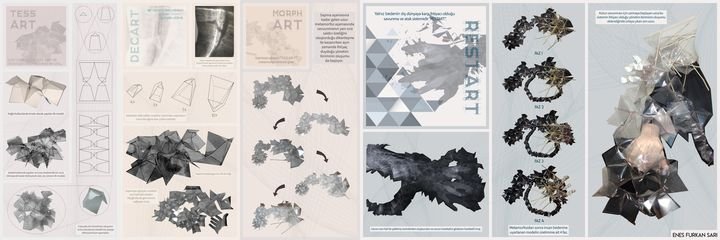
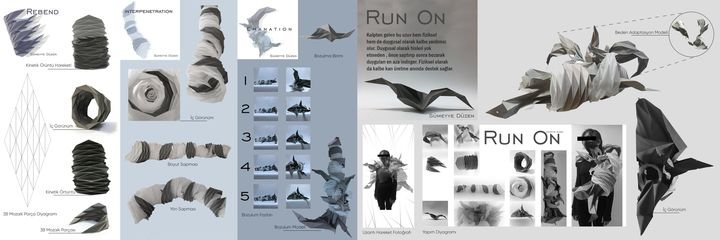
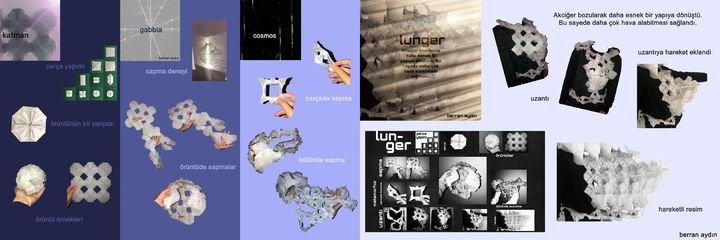
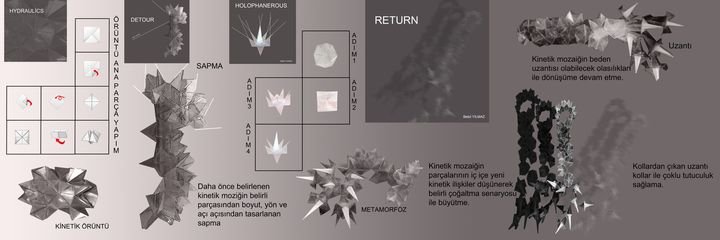
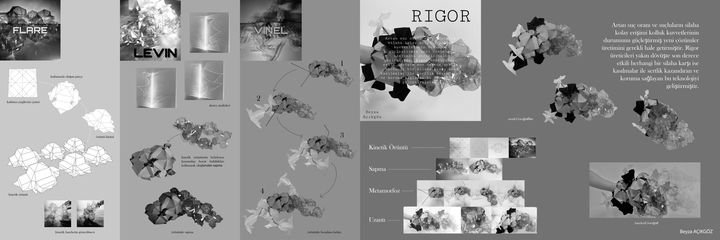
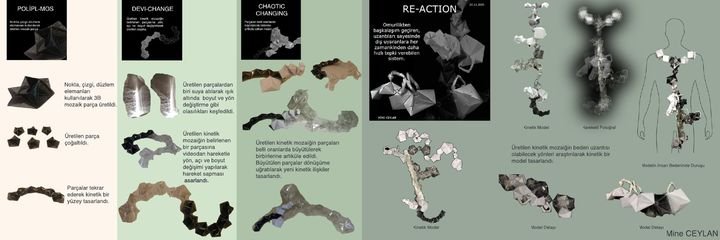
The first basic design studio of the first year was set up under the name “Studio UN-BOX”, together with the Architectural Design I studio of the same semester. The semester began with a piece of acetate: the first void construction produced by cut-and-fold grew into a repeating mosaic, the mosaic into deviation, transformation and oblique cut, and from there into a kinetic extension of the body and a bio-tectonic model learned from nature.
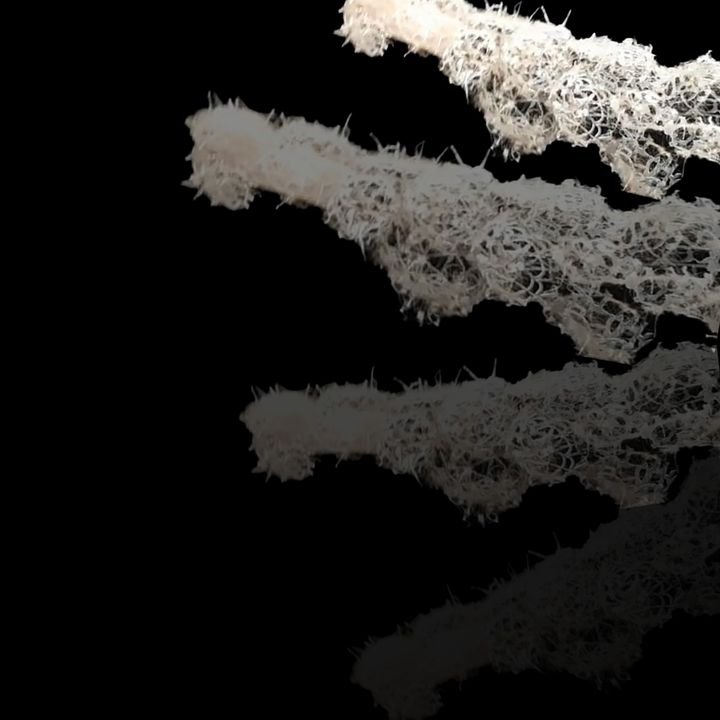
Each step was tested by an experiment: the resulting construction was observed and filmed under light, inside a container full of water, in fog and in natural light. In three “experiment observation” stages the models were opened up to experience; action potentials that could be extensions of the body and context were photographed and documented in A5 booklets.
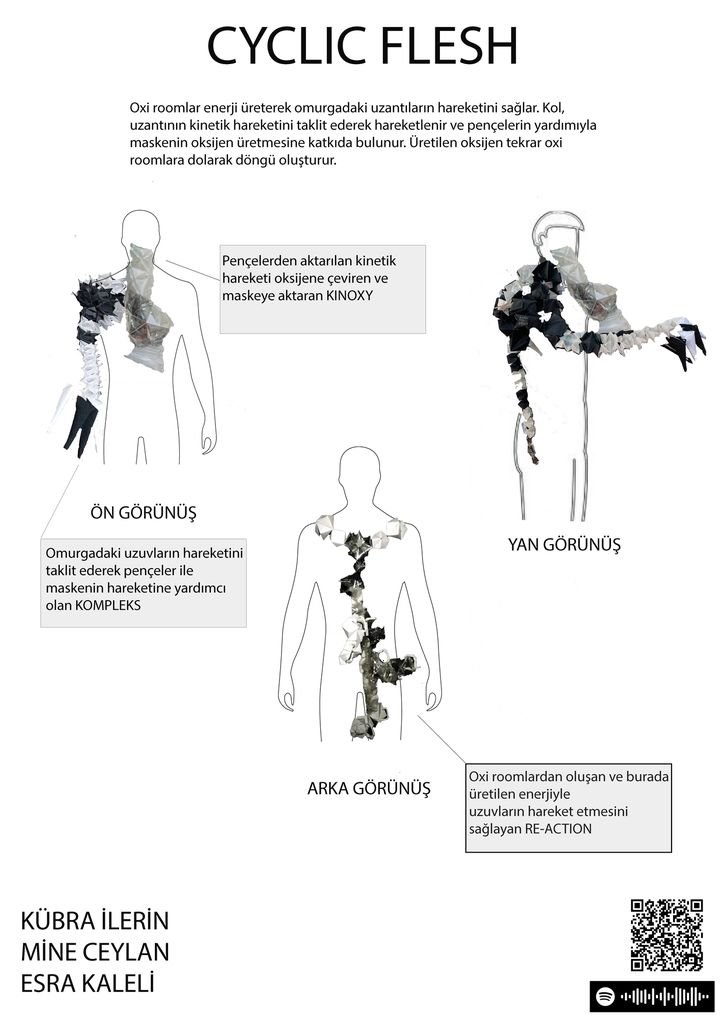
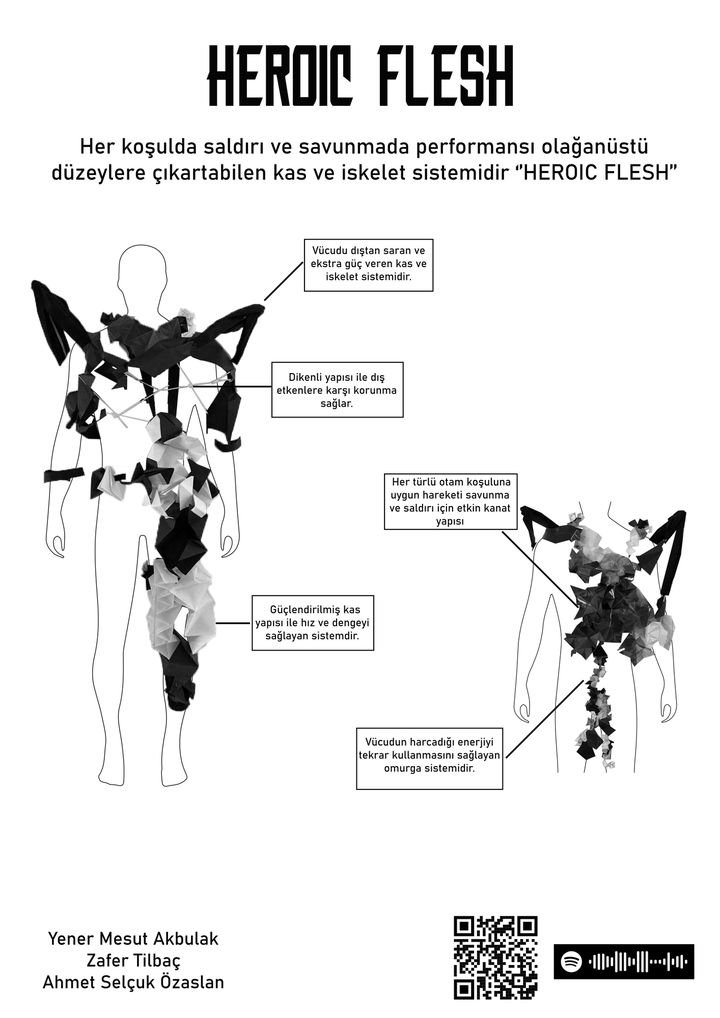
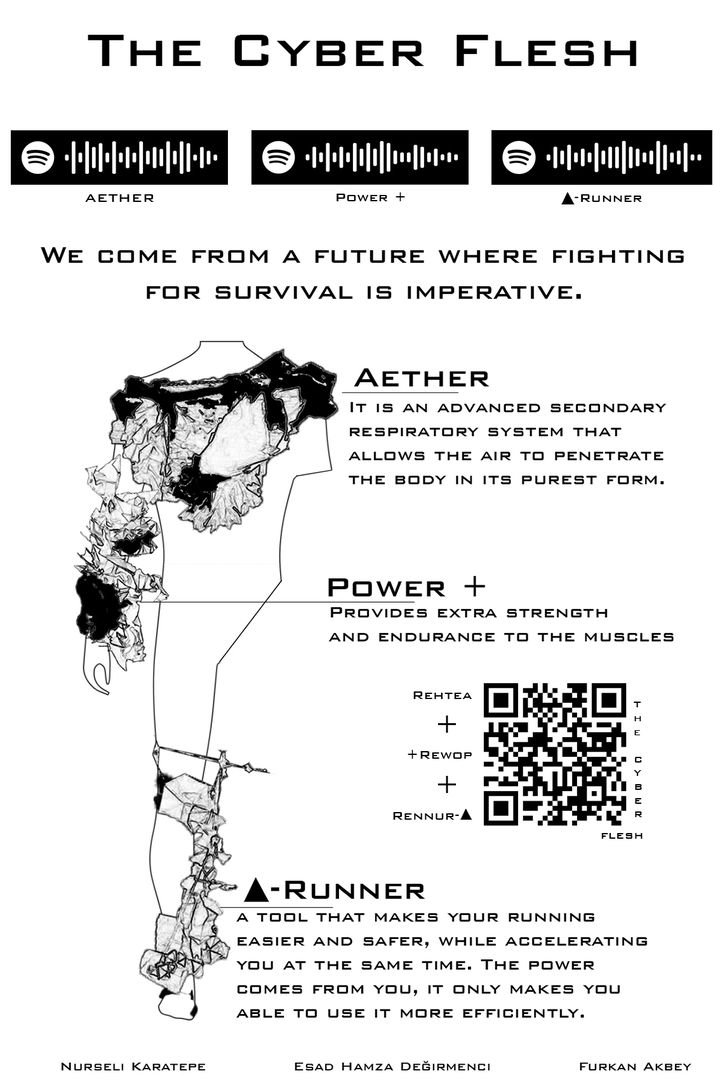
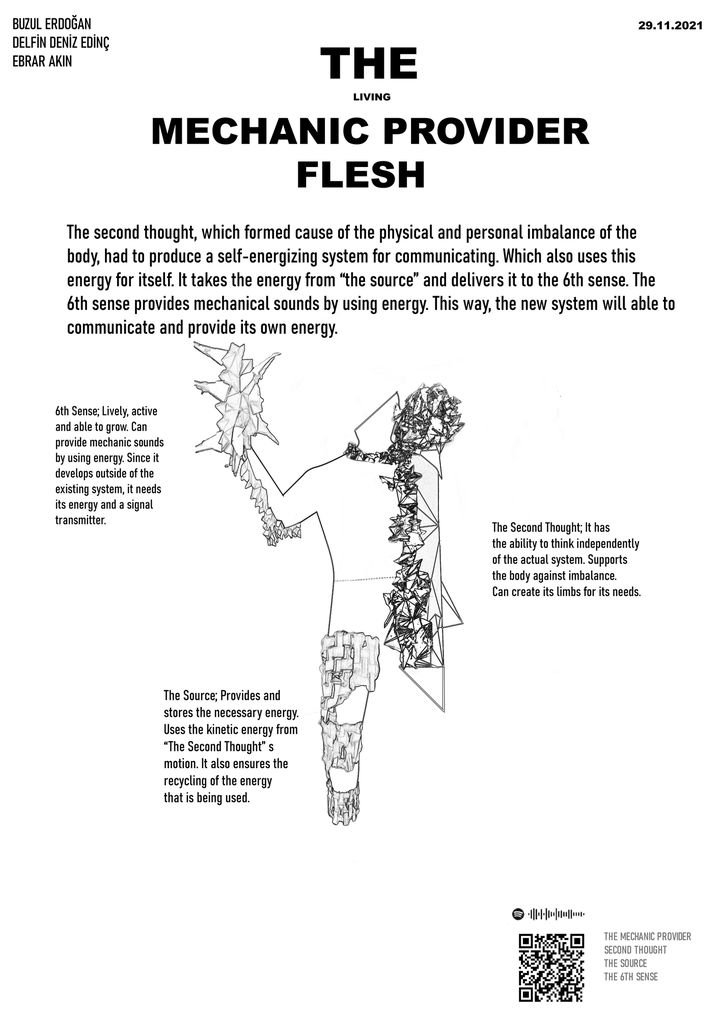
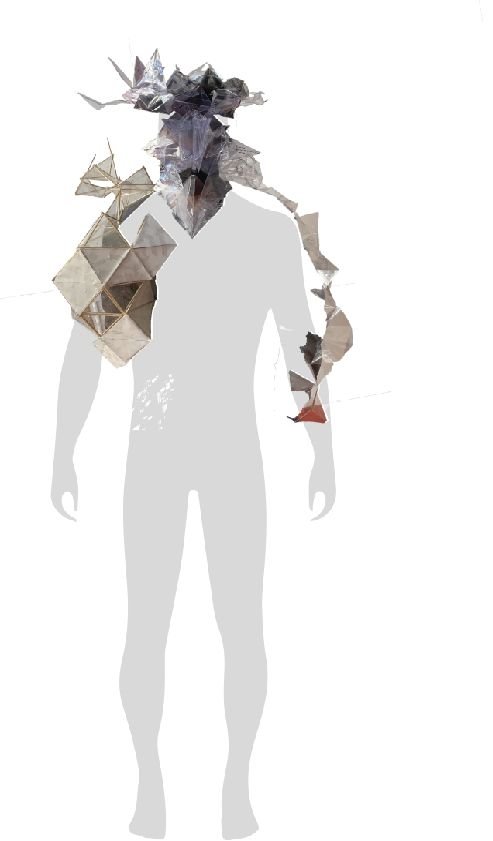
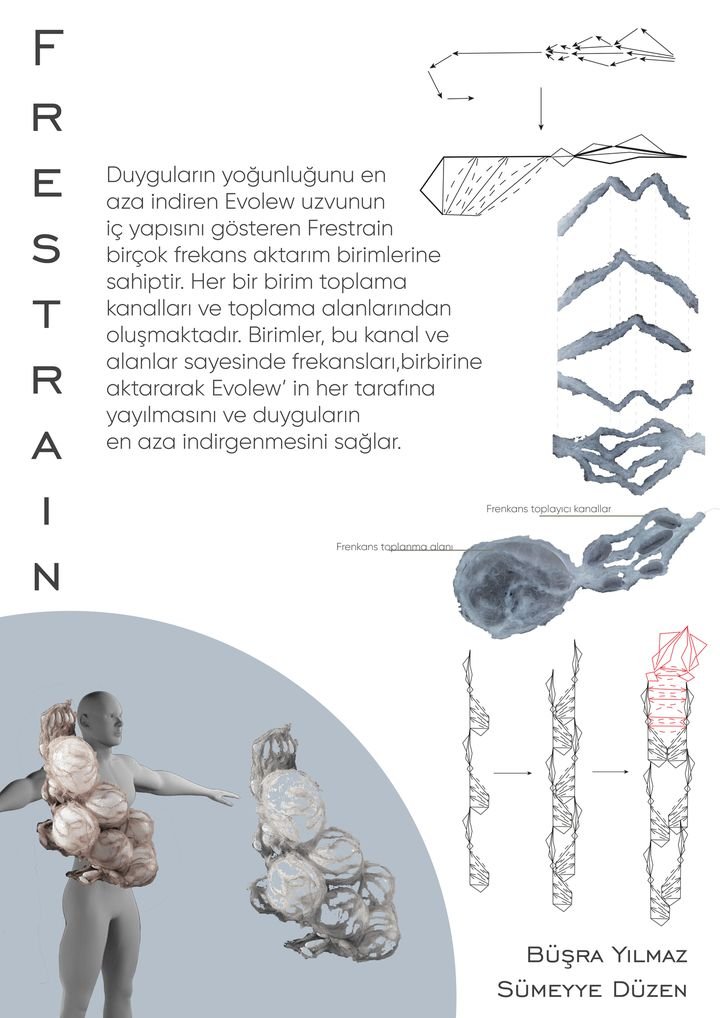
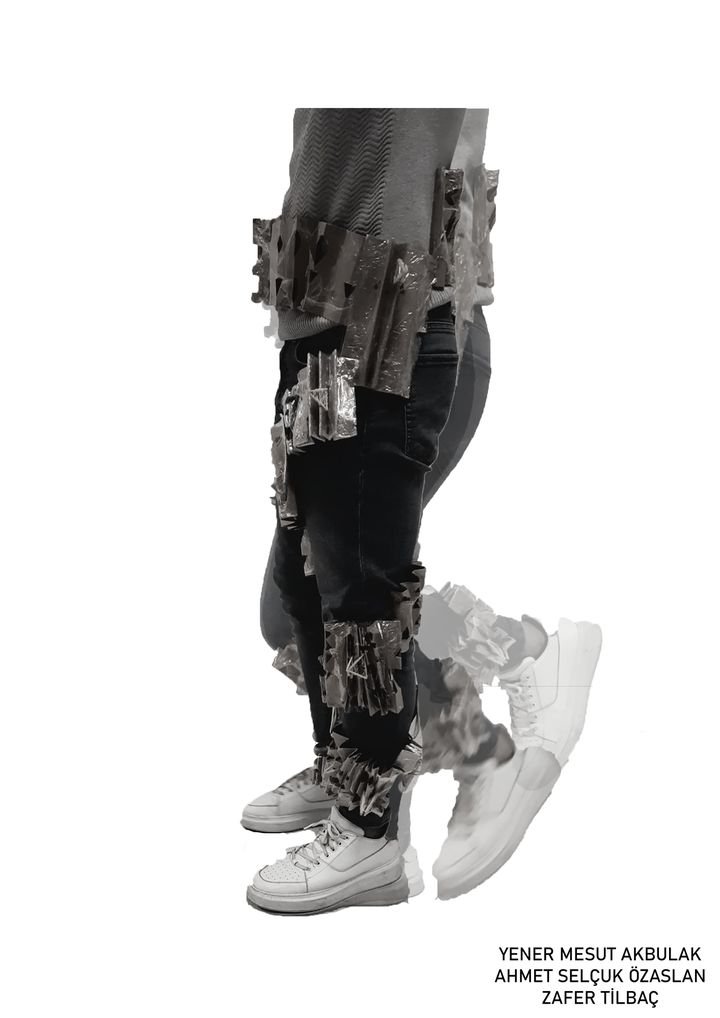
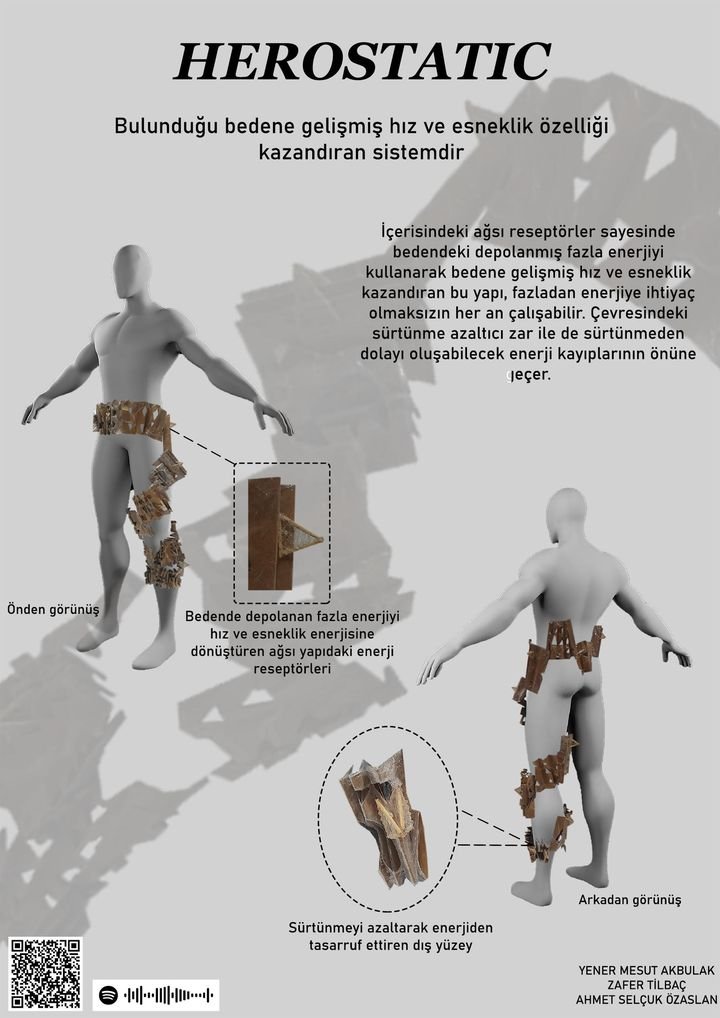
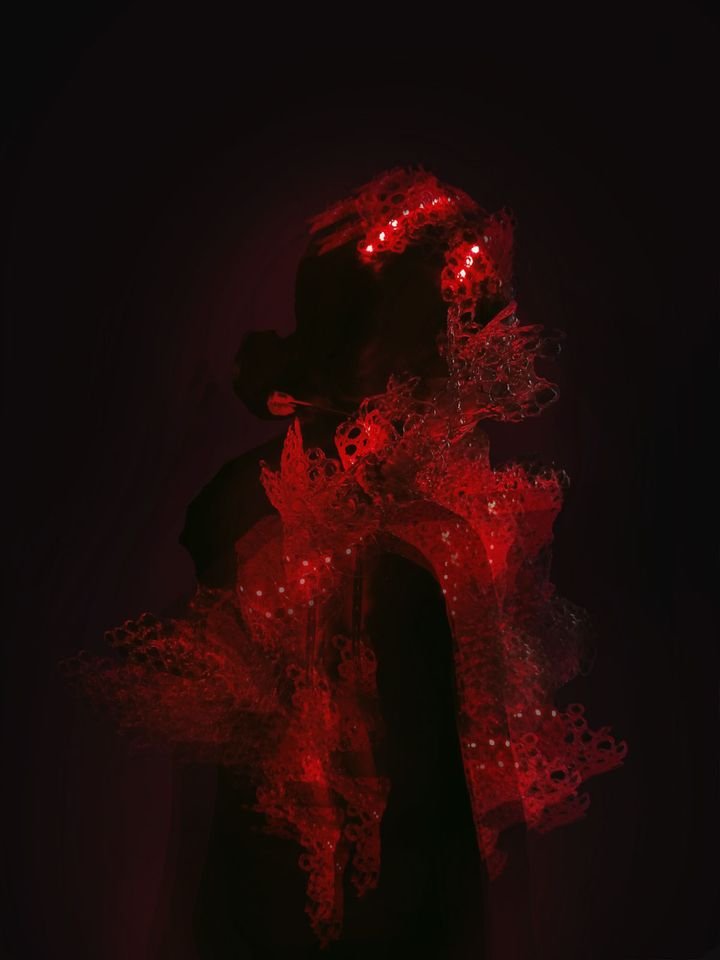
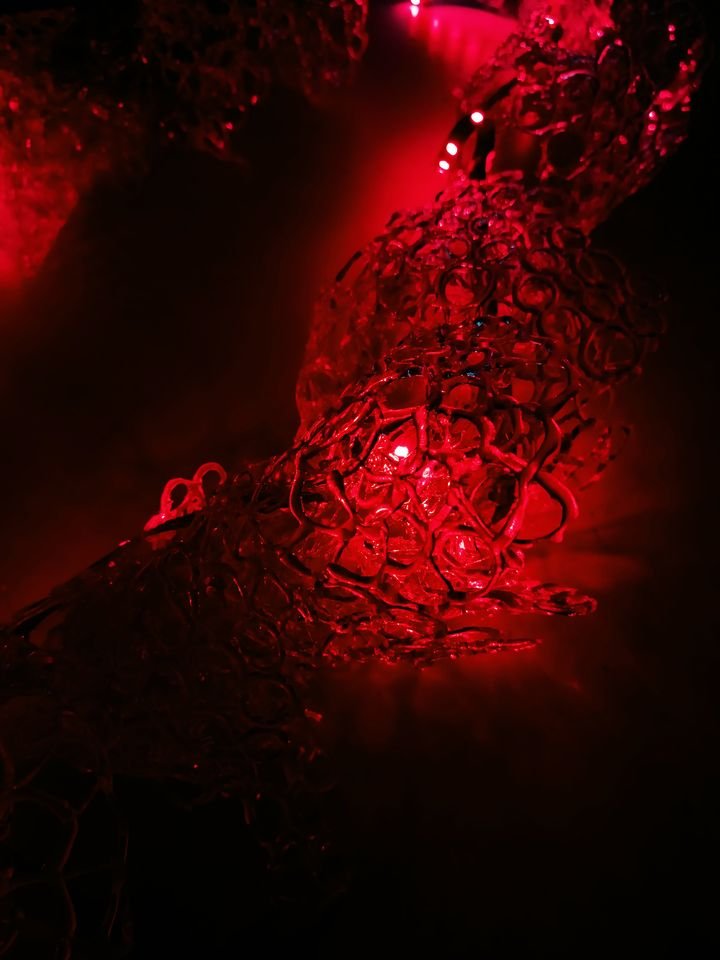
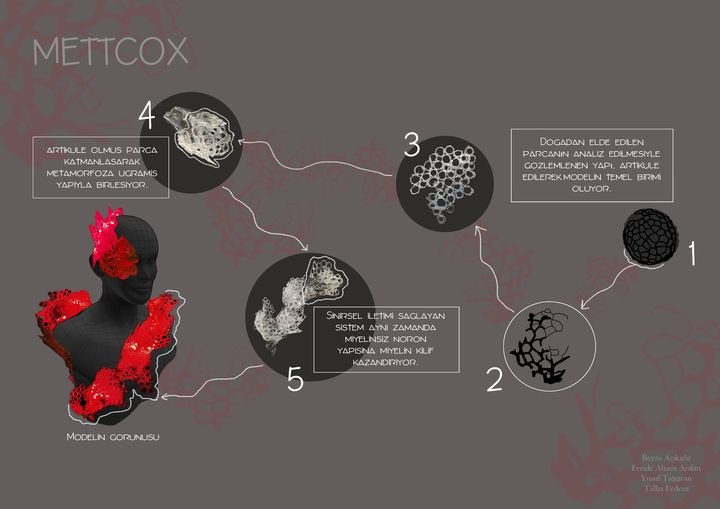
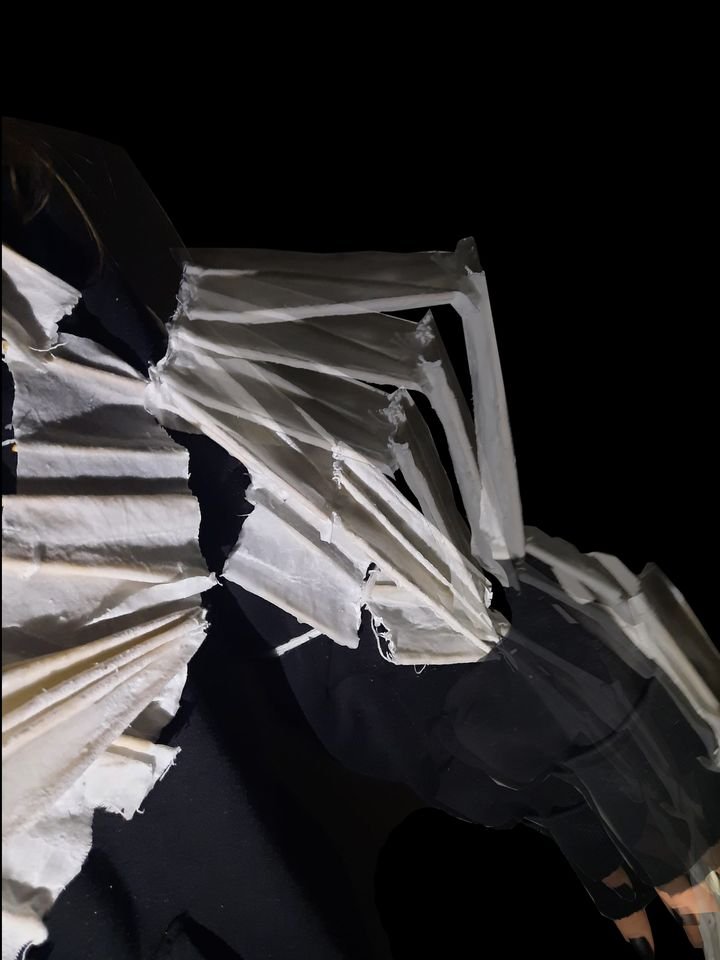
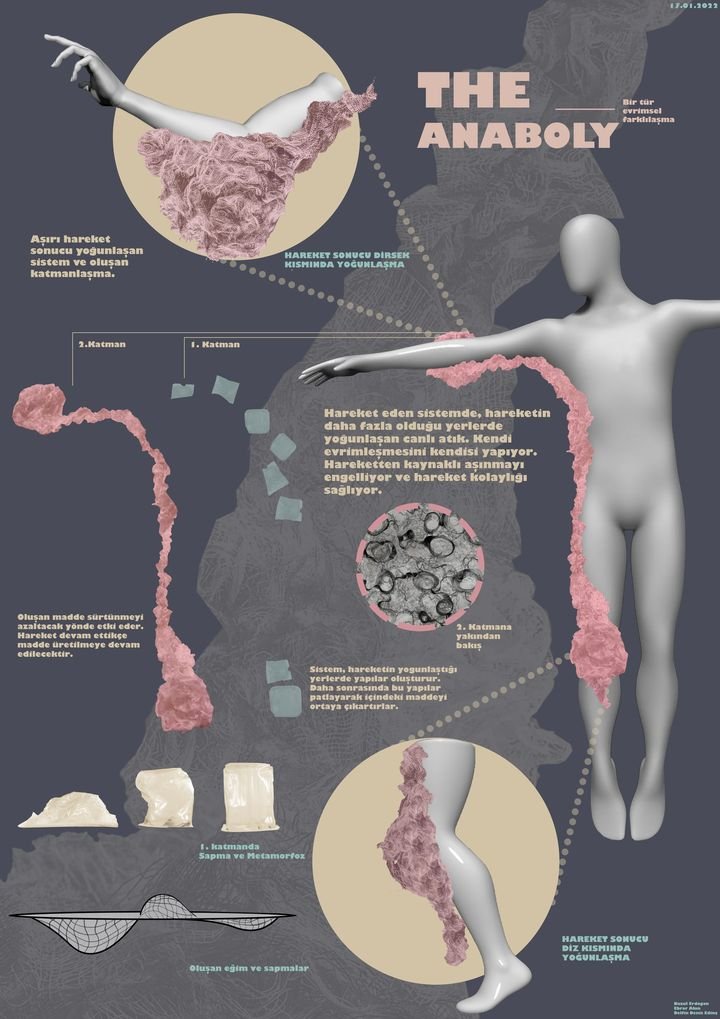
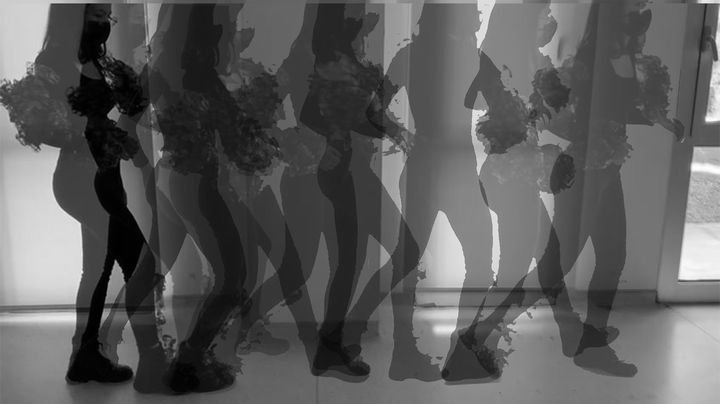
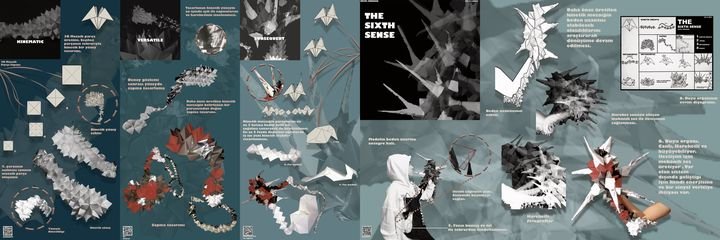
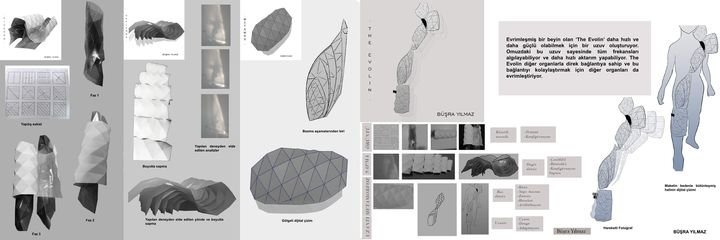
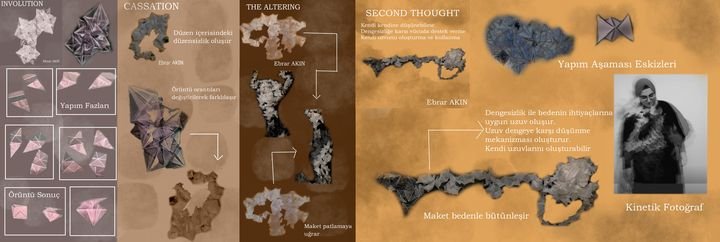
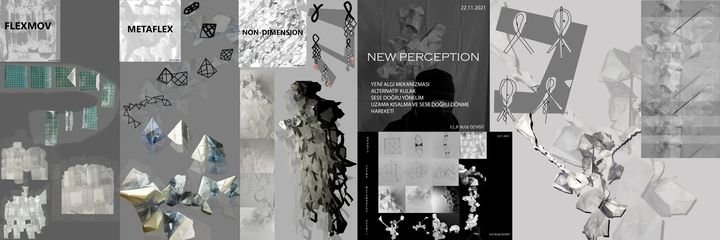
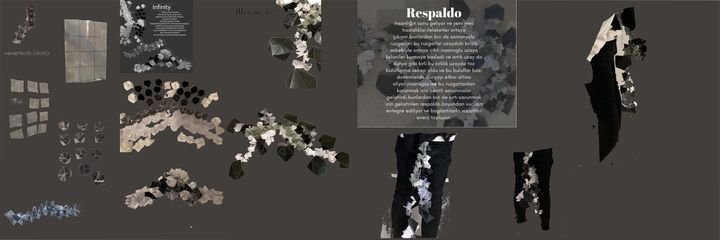
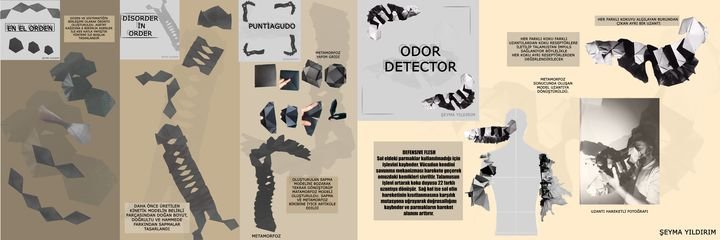
At the interim submission, the groups produced wearable “FLESH” extensions conceived as a new organ or defensive extension of a body evolved through mutation; motion videos and sound lists were added to their posters. The final group projects carried the bio-tectonic model onto the body at 1/1 scale. Each student also submitted a process sheet and a process video tracing all stages of the semester.
modules 9
-
week 1
First dialogue, first encounter
-
week 2
Formless
Experiment: observing the construction under light and recording it on video.
concepts point, line, plane
production a first void construction using A3 millimetric acetate and the cut-and-fold method
materials and techniques A3 acetate with a photocopy of A3 millimetric paper
-
week 3
3D mosaic
Experiment: observing the prototype inside a container filled with water, with different behaviours of the pattern vectors.
concepts pattern, configuration
production an A3-sized kinetic mosaic made by repeating a 3D mosaic piece
materials and techniques transparent and semi-transparent acetate, 2D drawings of the mosaic geometry, 3D A3 model
-
weeks 4–5
Change-turn
Experiment: observing the prototype in fog. Experiment observation 1 “Kinetic Extension” (individual): the mosaic is opened to experience, the action potentials that could become extensions of the body are documented, A5 booklet (interim submission 1).
concepts diversity, wholeness, configuration, deviation
production a deviation in one or several pieces of the kinetic mosaic; redesigning the prototype by sewing, gluing and articulating it with white fabric
-
week 6
Break-turn
concepts transformation, deconstruction, phases, motion
production a surface made by transforming one piece of the mosaic in five phases and articulating them together
materials and techniques black or white canson, 2D drawings of the phase geometries, 3D model
-
week 7
Oblique cut
Experiment: observation and video under natural light.
concepts section, oblique surfaces
production an oblique cut opened into the previous work with the help of heat
-
weeks 8–10
First tectonic
Experiment: the construction meets a piece of ground in a lived environment and is opened to use. Experiment observation 2 “Adaptive Tectonic” (collective): the lighting element is given a name, and the A5 booklets are printed in class to set up a shared platform of experience.
concepts material, colour, texture, light
production the oblique-cut module turns into a tectonic construction; the module is conceived as a light source and evolves into an alternative lighting element
materials and techniques wax melting, sewing, moulding, layering, injection into gaps
-
weeks 11–14
Bio-tectonic
Experiment observation 3 “Bio Extension” (individual): the bio-tectonic model is opened to experience, the action potentials that could become extensions of the context are documented, A5 booklet (final submission).
concepts section, oblique surfaces, nature, structure, geometry, product, light, material
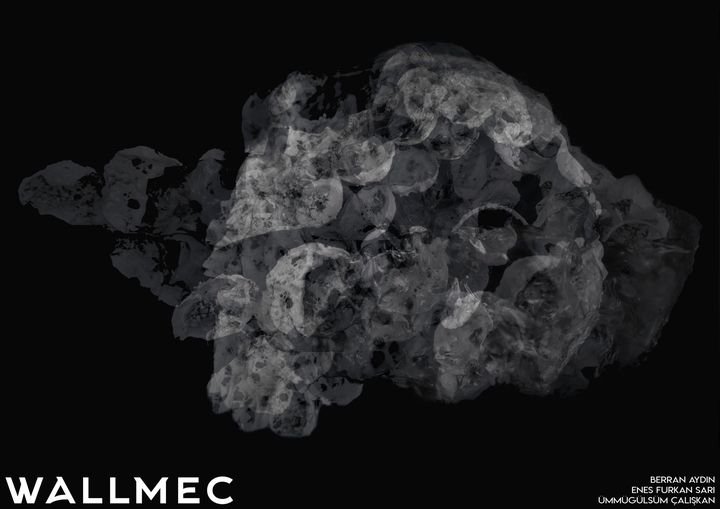
production examining an adaptive structure from nature through close-up observation and interpretation and remodelling it together with the previous scenario; turning the structural model into a surface model and a prototype for the 4th module of Architectural Design I
materials and techniques sketch, original tectonic experiments, text, poster, collage, abstract diagrams, structural model, 1/1 model, 20×20 bio-model record sheet
-
week 15
Colloquium
students 32
Özgür Kavurmacıoğlu's group
Ayşenur Sanlı, Buzul Erdoğan, Büşra Yılmaz, Delfin Deniz Edinç, Ebrar Akın, Elif Buse Özyiğit, Enes Furkan Sarı, Esra Kaleli, Hande Hatipoğlu, Kübra İlerin, Süha Yusuf, Sümeyye Düzen, Şeyma Yıldırım, Talha Erdem, Ümmügülsüm Çalışkan, Yusuf Taşgıran and Zafer Tilbaç
Fitnat Cimşit Koş's group
Ahmet Selçuk Özaslan, Berran Aydın, Betül Yılmaz, Beyza Açıkgöz, Esad Hamza Değirmenci, Feride Ahsen Arslan, Furkan Akbey, Gözde Hacıeyüpoğlu, Gürcan Oruç, Mine Ceylan, Nurseli Karatepe, Pembenur Öztürk, Sümeyye Aytav, Tuğrul Kanlıdere, Yener Mesut Akbulak