Biomaterial and Remix · Sustainability in Architecture
ARC309 Sustainability in Architecture
“There is no such thing as sustainability.”
An elective course that discussed sustainability through two assignments. For the midterm, students built a remix video from videos that already exist on the internet, without producing new footage; for the final, they chose a biomaterial, examined it and developed a design proposal for a problem they had observed on campus.
midterm: remix with found footage
Rather than shooting new videos and producing digital waste, from the standpoint of sustainability, students were asked to build a manifesto-like video by drawing on the trillions of videos that already exist in the world. Experimental video technique: remix with found footage; no new video is shot and no text is used in the video.
Students answered these questions through a found-footage remix.
- According to the course, which concepts does the definition of sustainability include?
- How would you define squeezed spaces in the city? (observation)
- What scenarios could be constructed through the city–nature relationship in these squeezed spaces? (fictional narrative)
- Submission: a PDF in which the answers, keywords and concepts are written, and a 60–90 second remix video; individually or in pairs.
student work 21
final: design proposal with a biomaterial
The final consists of two stages: analysis and sketch–collage. Teams are formed of one to four people.
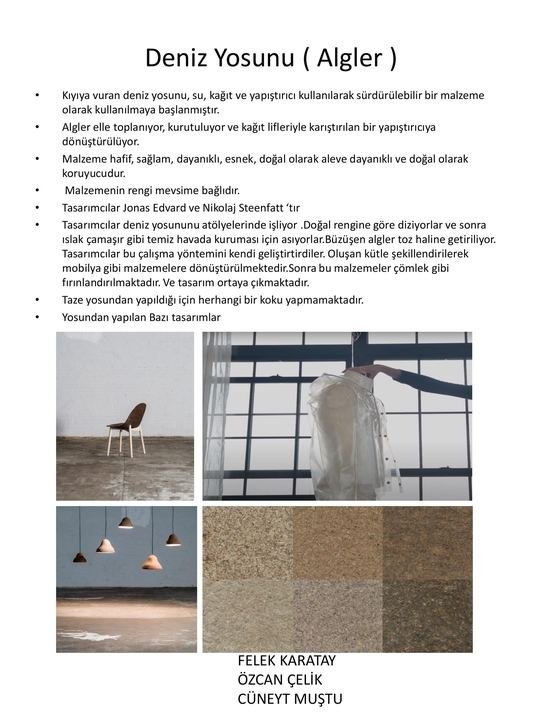
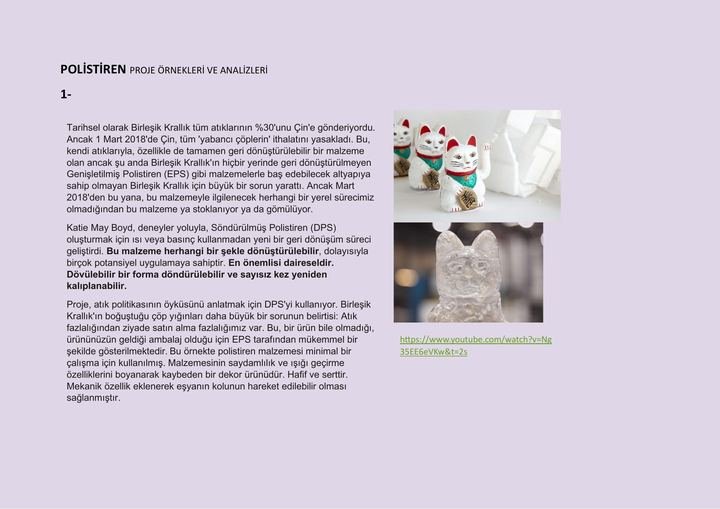
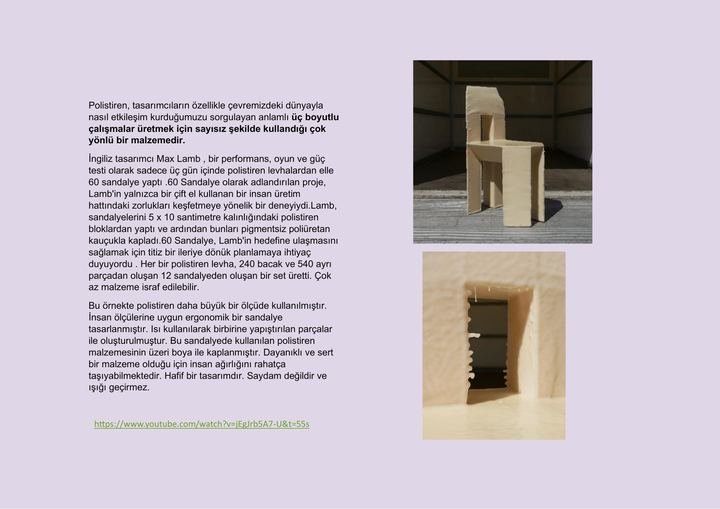
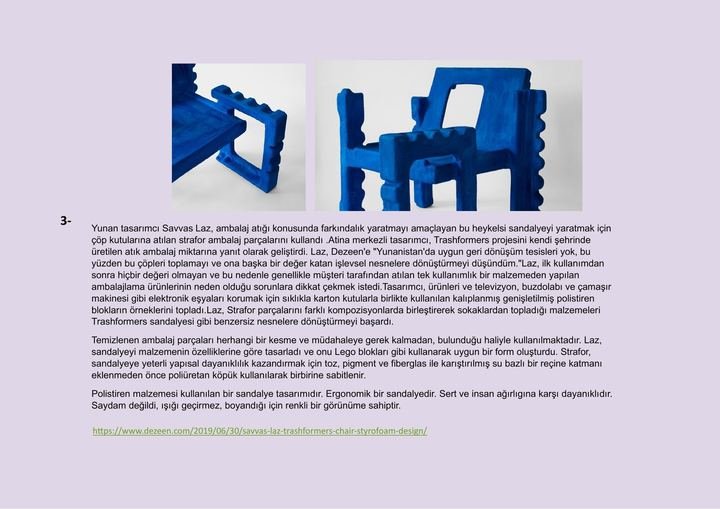
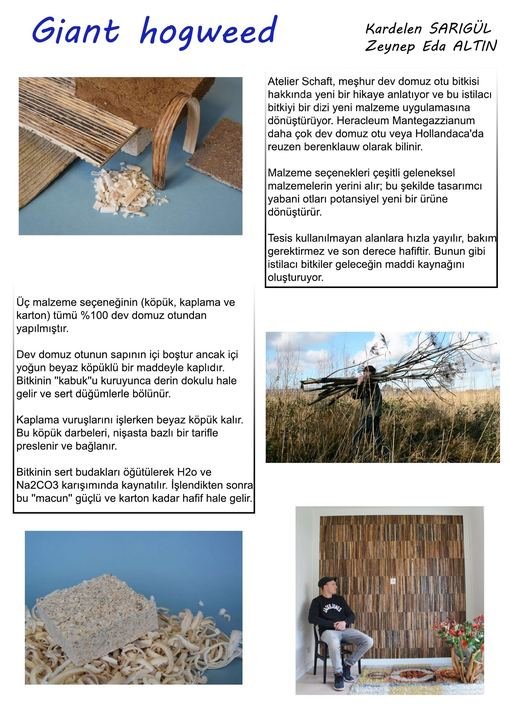
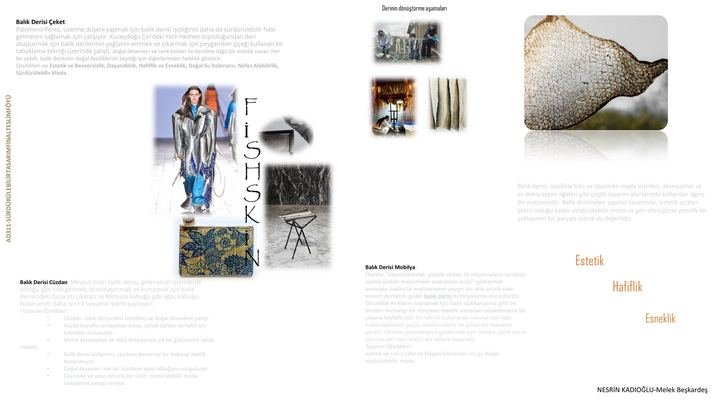
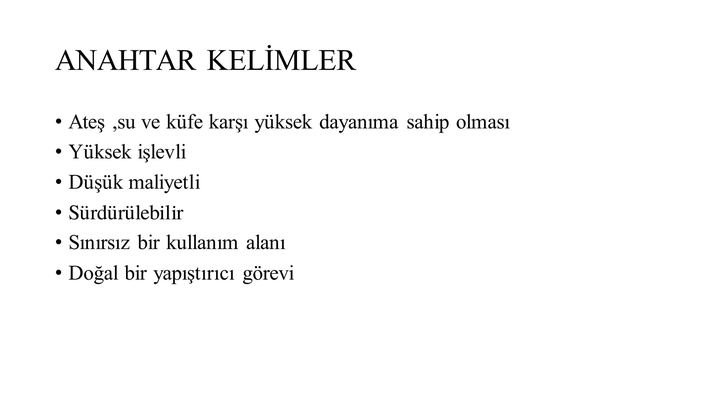
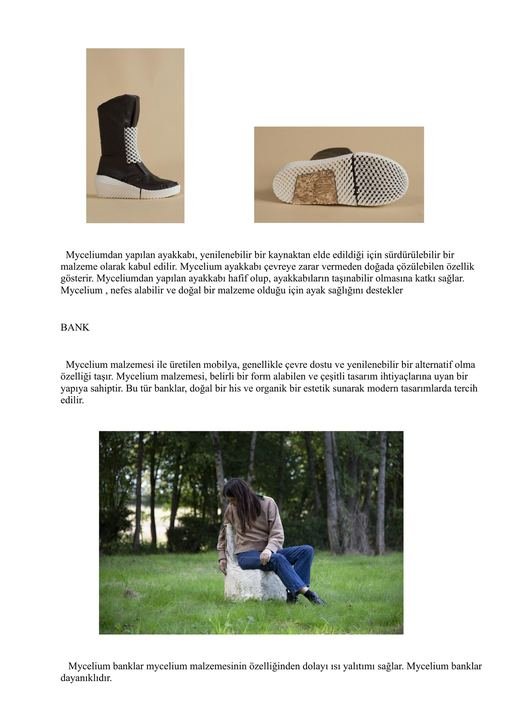
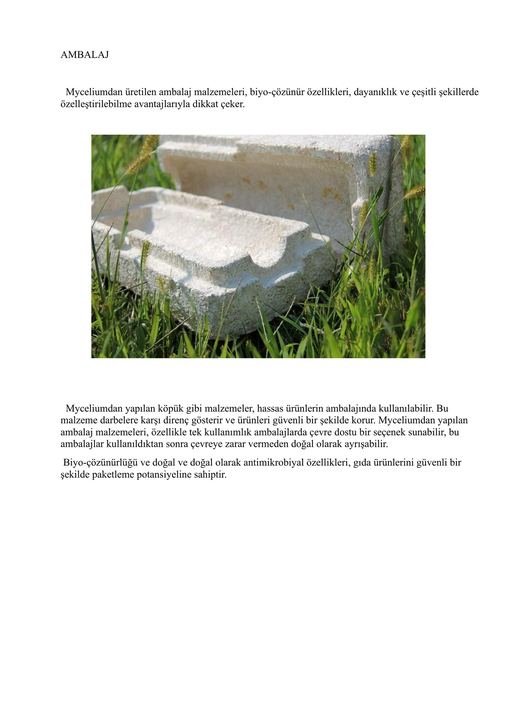
- Analysis: a biomaterial is chosen from the Future Materials Bank (futurematerialsbank.com); three design examples in which the material is used are researched. How the material is used, its behaviour, structure and properties (such as translucency, hardness, lightness, flexibility, biodegradability) are observed and written down; the aim is to discover keywords belonging to the biomaterial.
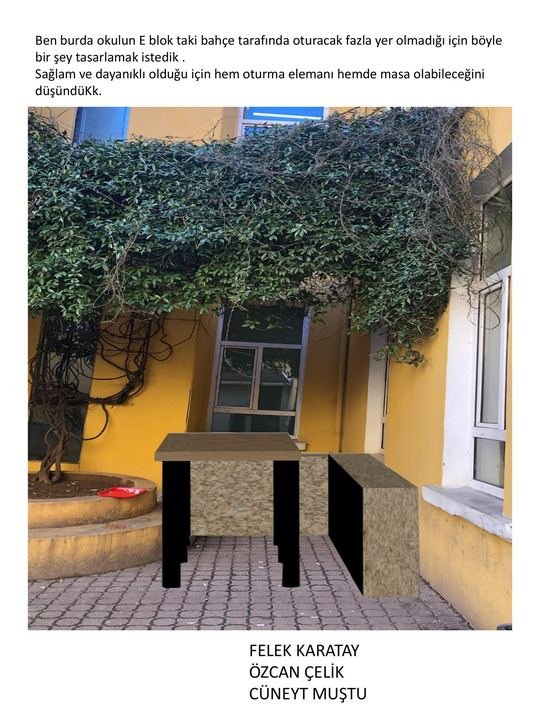
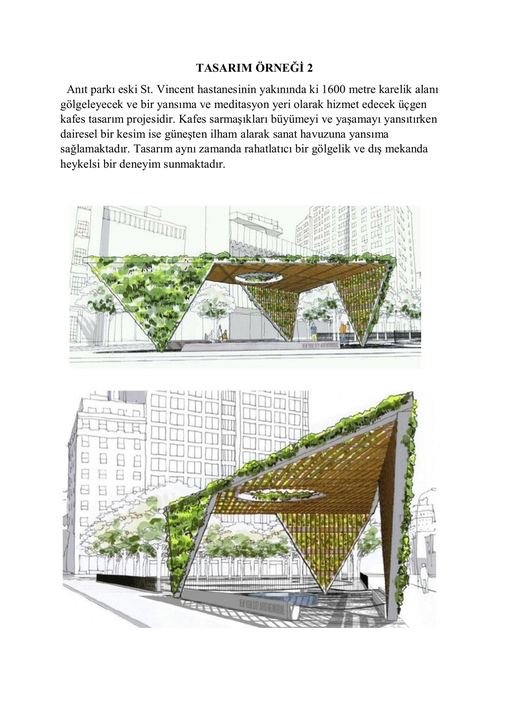
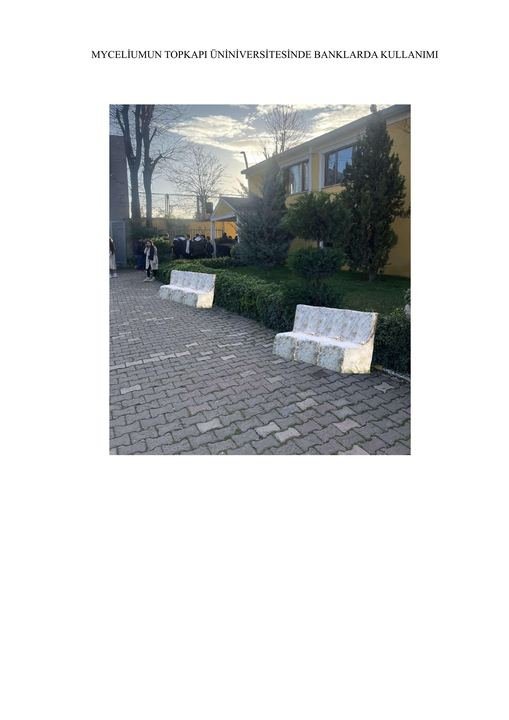
- Sketch–collage: a design proposal is developed for a problematic situation observed in an open or enclosed area on the Kazlıçeşme campus of Topkapı University: the need for shaded areas, the need for furniture such as benches, chairs, tables, rubbish bins and exhibition boards, sun breakers, lighting.
- The area is photographed; sketches and collages are made on it by hand or digitally. The collage should show how the problem is solved with the chosen biomaterial; the keywords from the analysis should fit into the context of the solution.
student work 12
Ali Rıza Sünbül, Azra Şahin, Esra Türeker


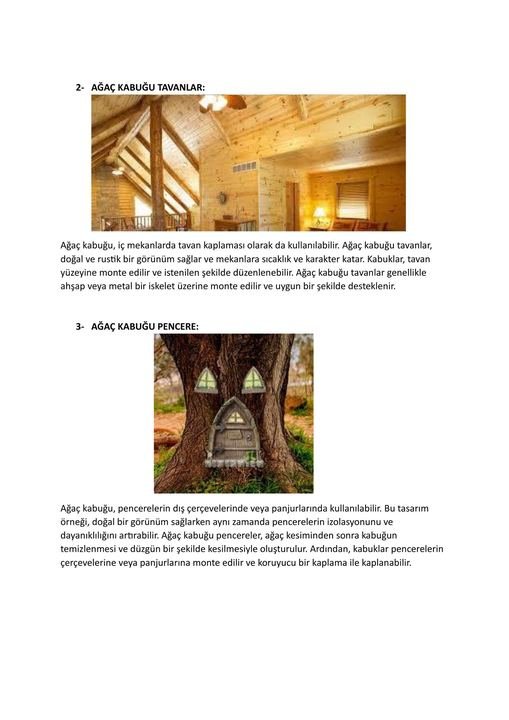
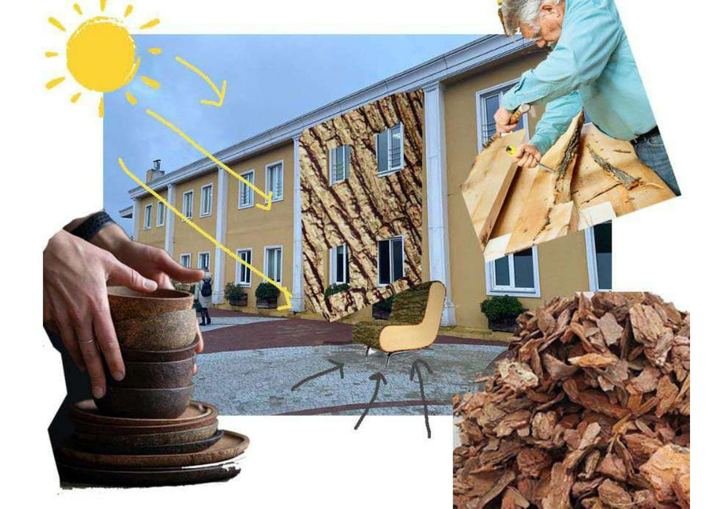
Cüneyt Muştu, Felek Karatay, Özcan Çelik
Eda Nur Lalık, Hatice Kılınç



Eylem Alp, Nojin Haj, Seray Kadıoğlu, Sümeyye Demirelli


Gamze Dağ, Sude Taşdizen, Gülistan Ecet




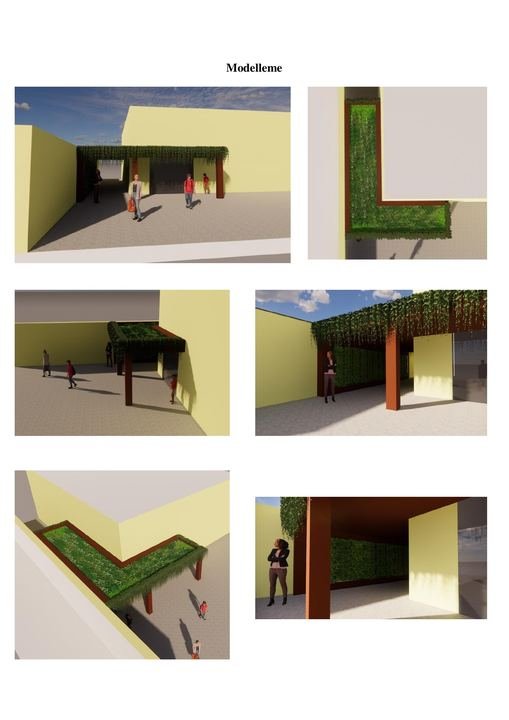
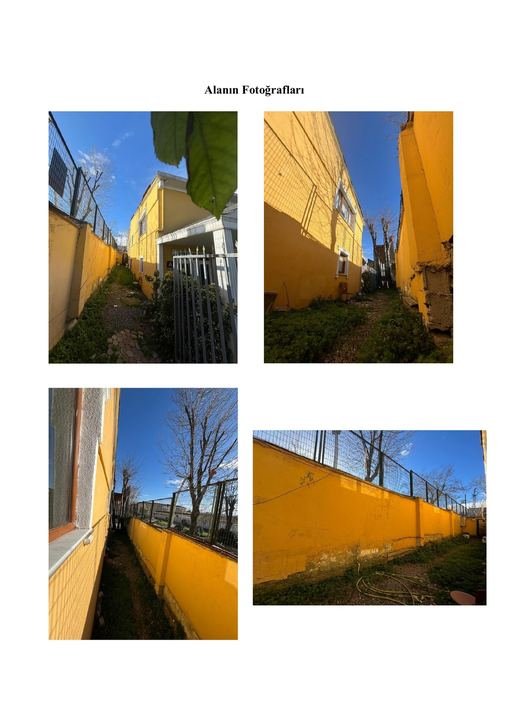
Kardelen Sarıgül, Zeynep Eda Altın

Melek Beşkardeş, Nesrin Kadıoğlu

Muhammed Can Çoktin, Yusuf Şahin, Yağmur Kayran


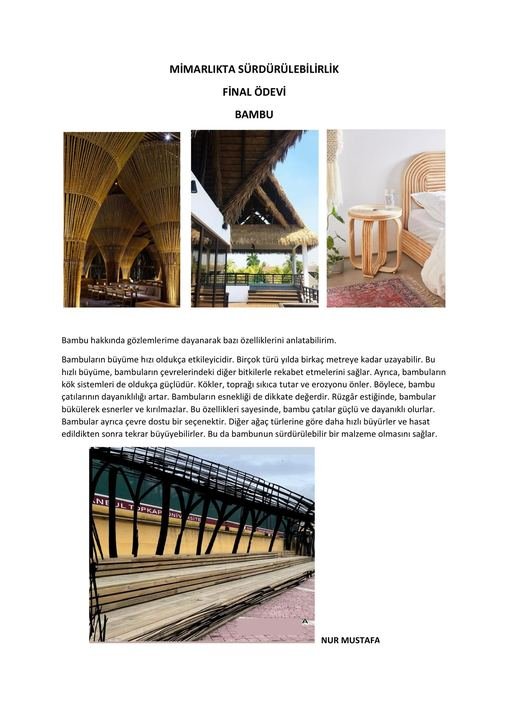
Nur Mustafa
Özlem Sıla Gündüz



Reyyan Ebrar Kurtuluş, Taylan Uluç, Yasin Bayazıt, Sara Ayaz



Sema Nur Tonoğlu
